The cost of income protection insurance


Contents
Most people are looking for the best cover at the lowest price, but there isn't a simple solution. The cost of income protection insurance depends on several variables, some of which relate to an individual’s circumstances while others arise from the customisation of the policy.
Insurance policies are provided by insurance companies and in most cases they are underwritten by other companies. Underwriting is the process of assessing the level of risk in providing specific insurance and deciding what level of fee should be charged to cover that risk. It’s called underwriting because in the early days of insurance, people who agreed to take on the financial risk would sign their name on a document under the amount they promised to cover.
Premiums payable are influenced by several factors. These are the initial considerations:
Age
Younger people usually pay less and as the risk increases with age, so do the premiums.
Occupation
What you do for a living is important, because high-risk jobs will lead to higher premiums. A steeplejack will pay more than an office worker.
Health and lifestyle
When you apply for income protection you’ll be asked to complete a questionnaire, providing answers to questions regarding your current and past health, whether you smoke, how much alcohol you drink and perhaps even your family’s medical history. Your answers help the underwriter make an accurate assessment of the risk.
Income
What you earn is a key consideration because income protection is a way of replacing your lost income and isn’t designed to pay you more than you would normally make. To reflect the difference between your gross and net pay, policies will pay you up to 65% of your gross income, although you can choose a lower level of cover. Eleos pays up to 65%.
Since every case is different, it’s difficult to come up with averages. Later we’ll look at your options for keeping costs down, but this is a very rough guide:
- Under 30s in low-risk jobs - £5-£20 per month
- Over 40s or in moderate-risk jobs - £20-£40 per month
- Over 50s or high-risk jobs: - £40 or more per month
These are broad figures, so you should only see them as a very approximate indication.

Find out more for free
With a no-obligation quote from Eleos you can find out what it costs and what it's worth
This is really a question for the individual. Some people feel their likelihood of being forced to stop working is remote, or they believe they have adequate provision through their employer’s sick pay scheme or personal savings. However, the chances of losing your income through illness or injury might be higher than you think: 2.8 million people are currently in that position. And while sick pay and savings may help for a while, income protection can give greater support for longer, and can also work in combination with your other sources of income.
How much cover do you need?
As we’ve mentioned, the most you can get with Eleos is 65% of your pre-tax income. However, you might feel you can manage on less than this, which will cost you less in premiums. The best approach is to work out how much you need to cover the essentials like housing, bills and food. Once you’ve got that figure you can factor in an amount of disposable income that covers your wants on top of your needs.
What premium can you afford?
Again, this is a personal decision. Getting value for your money is important, especially in financially difficult times. But your income is one of your most valuable assets, so you may want to weigh up the fairly modest cost of protecting it against the impact of losing it. If you can’t earn, then everything you’ve done to maximise your income could count for very little.
Once you’ve provided the essential information about your age, occupation, income, health and lifestyle, you’ll get a policy quote based on those details. If you feel the premiums are too high for you to manage, there are adjustments you can make to bring the cost down.
Level of cover
Try reducing your cover from the maximum of 65%. The lower the monthly benefit you’ll receive, the lower the cost will be.
Waiting period
When you take out a policy you’re asked to choose a waiting period. This is the time between making a claim and receiving your first benefit payment. You can choose anything from one week up to several months, depending on how long you can manage without help. The longer you can wait, the lower your premiums will be. If you get sick pay from your employer for a limited time, you can set your waiting period to end when your sick pay stops so you’ll start receiving benefit payments from your policy instead.
Benefit period
Income protection policies give you a choice of benefit period. This is the maximum time for which you’ll be paid under a single claim. Benefit periods are typically 1, 2 or 5 years. The shorter periods will cost you less.
The cost of income protection isn’t a fixed figure. Everyone’s needs and circumstances are different. Getting quotes from insurers will give you the best indication of what it’s likely to cost and it won’t commit you to buying. You can get an online quote from Eleos here.
The cost of income protection insurance
Frequently asked questions
Fact-checked and reviewed by Kiruba Shankar Eswaran or another licensed agent on our team. Read our editorial standards.
This guide is for general educational purposes and is not financial advice. Cover, eligibility and terms vary by insurer and by policy. Always read the policy documents for the full terms, limitations and exclusions before you buy.
Related resources
Life insurance cost UK 2026: what 6,557 real insurer quotes show
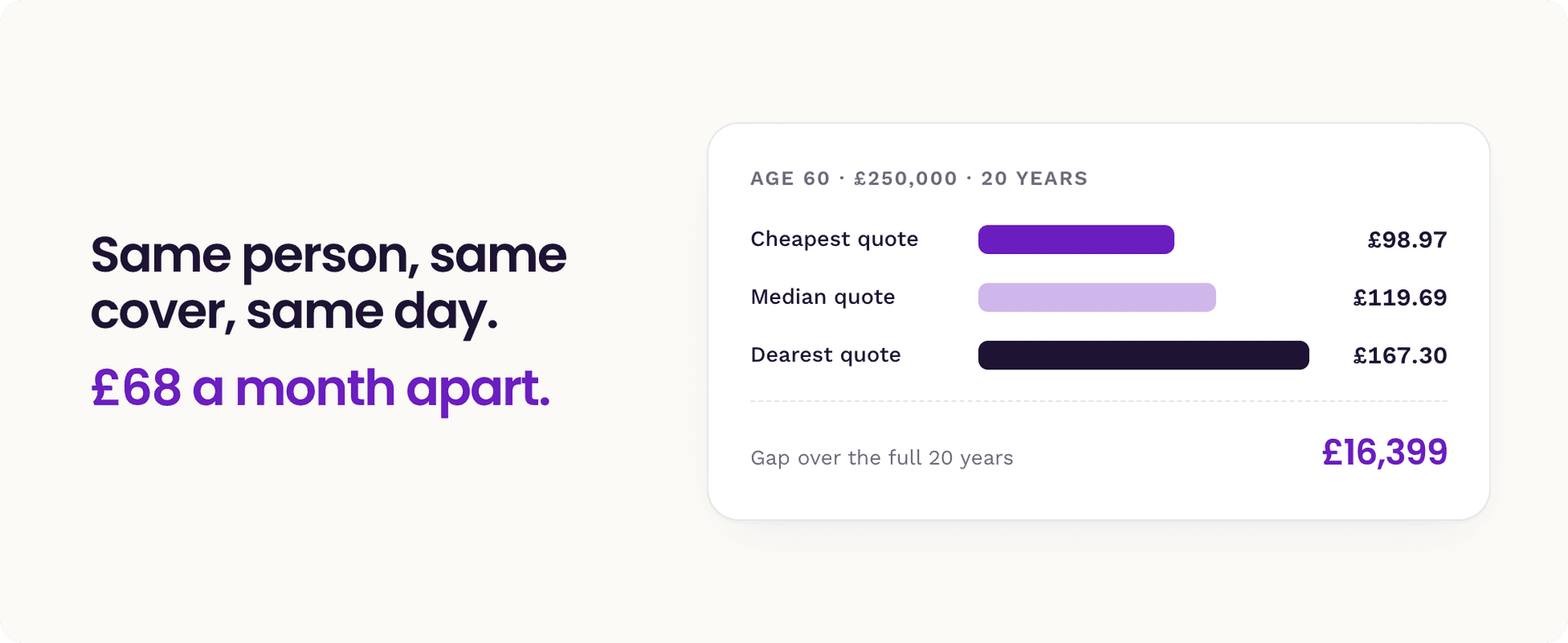
We collected 6,557 live quotes from UK life insurers in September 2026 and compared every one. Median prices by age, cover amount and policy length, how much smoking multiplies your premium, why bigger policies cost less per pound, and how mortgage protection compares with level cover.

What Is Term Life Insurance? UK Guide & Quotes (2026)
A complete UK guide to term life insurance: how it works, what it costs, the main policy types, underwriting, how it compares with whole of life, and the top UK providers.

6 Financial Resilience Tips for 2026
New Year, new money mindset. It’s time to break free from financial anxiety once and for all. Here are six simple tips to boost your financial resilience in 2026 and bring you peace of mind all year long!

Life Insurance for Young Adults
Life insurance for young adults doesn't have to be complicated or costly. This comprehensive guide covers why purchasing life insurance as a young adult locks in lower rates based on current health and how to pick the proper policy length and provider for your situation.

Turning Customer Curiosity Into Confidence: Theea's Coverage Calculator
Introducing Theea's Coverage Calculator: the intuitive insurance tool inspired by thousands of customer conversations that turns anxiety into tailored advice and confusion into confident choices.

Meet Your Newest Eleos Perks
We’re expanding our perks with two new additions designed to turn good intentions into healthy habits. Discover everything you can get for free with an Eleos policy.