How to calculate your ideal income protection coverage


Contents
Insurance plays an important part in our lives. Sometimes it’s a legal obligation, like motor insurance, but many of us also choose optional insurance like home, health and life insurance.
There’s one type of insurance that people either don’t know about or don’t value: income protection.
The UK insurance league table
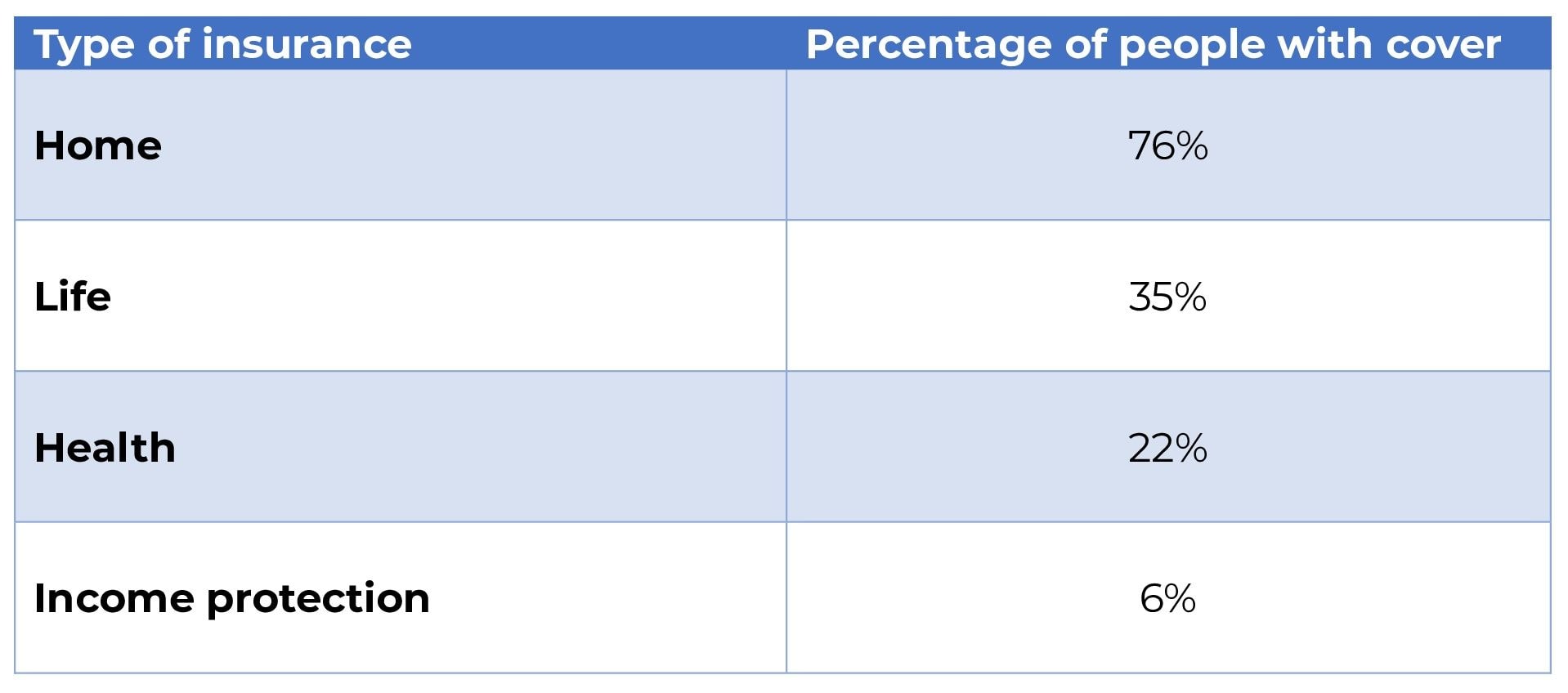
Sources: Home, Life, Health, Income protection
If so few people have it, is income protection worth it? That’s a very common question and some figures should help to answer it.
For many people, their income is their most important asset. It pays the mortgage or rent, it covers the bills, it buys the food and it pays for the non-essentials that make life easier and happier. Losing our job is a fear that most of us consider - at least occasionally - and yet illness and injury are a much greater threat to our incomes. Between December 2023 and February 2024, 2.8 million people were off work for more than 4 weeks because of illness.
In the UK, financial support for people on long-term sick leave is very limited. Employers are obliged to pay no more than the minimum Statutory Sick Pay of £118.75 per week for up to 28 weeks. Some employers choose to offer more, but this is far from universal. For the self-employed, Employment and Support Allowance pays just £92.05 per week.
The median average monthly wage in the UK is £2,420 before deductions for tax and National Insurance. Meanwhile, more than 11 million people have less than £1,000 in savings. This doesn’t apply to everyone but it illustrates how precarious many people’s income and finances can be.
Income protection insurance provides a solution by paying policyholders a tax-free proportion of their normal income while they’re unable to work. And yet only 6% of working adults have it, while 24% insure their pets.
When you apply for income protection insurance you’ll be asked about your age and health, as well as how much you earn, which is also the starting point to use as a form of income protection insurance calculator.
Next you’ll need to make decisions about key policy features. You’ll need to decide how long you want your benefit payments to last if you do have to take time off work. You’ll also have to choose a waiting period, which is the time between stopping work and receiving the first of your benefit payments. Shorter waiting periods mean lower premiums.
You don’t have to think at this stage about how long you want your policy to last – potentially until you reach retirement age – because you can cancel your policy any time you like or keep it indefinitely.
If you get ill or injured and have to stop working you can make a claim, which, if approved, will mean you receive a monthly benefit payment until you’re able to start working again or you reach the end of your maximum benefit period (1 or 2 years in an Eleos policy).

Need a helping hand?
If income protection sounds like the answer to your worries, you're in the right place
We’d suggest you follow these steps to calculate your ideal income protection cover.
Work out your monthly outgoings
Start with your recurring costs: mortgage or rental payments, insurance and loan repayments, gas, broadband, electricity, water, phone and council tax bills.
Next add up how much you usually spend in a month on essential items: food, clothes, shoes, travel, laundry and housekeeping.
Thirdly, try to work out the average you need for casual spending and luxury items, like eating out, entertainment, gifts, hobbies and even barista coffees.
Lastly, if you’re in the wise habit of putting money aside every month to build up your savings, don’t forget to factor this in.
This will give you an approximate idea of the amount you’d need to replace if you had to manage without your income.
What are your sources of income?
Assuming your wages are enough to pay for the costs we’ve considered above, the next stage is to look at your options for alternative funding in the event of long-term sickness.
Statutory benefits
We’ve already looked at how little you’ll get from Statutory Sick Pay or Employment and Support Allowance. If you do receive them, what you get from an income protection policy will be reduced by that amount.
You may be eligible for some sort of Universal Credit if you have a health condition that limits your ability to work or makes working impossible. If you have savings or investments of £16,000 or more you’re unlikely to qualify.
Other income
The only other realistic source of income is your savings. The advantage of using them is that you have instant access, whereas income protection requires a waiting period. The big disadvantage is that you can use them only once – they may have taken you years to build up and you could burn through them in a matter of months.
How much does income protection cost?
You’ve analysed how much you spend each month and what you spend it on. You’ve considered your options for replacing that income. Now you can focus on what you’d need an income protection policy to give you and how much cover you can afford.
Income protection insurance will replace up to 70% of your gross income. Tax and National Insurance deductions add up to 28% for people on the basic rate of income tax, so your take home pay is only slightly higher than the maximum available from income protection. It’s worth noting that most policies also impose a maximum monetary value on what you can get each month, which may be lower than 70% of your income.
When you apply, you’ll be given an initial quote based on your current earnings. This will show what the different levels of cover will cost in monthly premiums. In an ideal world you’d get enough to cover all the expenses you’ve included above. However, the world is rarely ideal and if the monthly premiums are too high for your current budget, some compromise may be necessary.
You should be able to adjust your quote downwards if necessary until you find a level that you can afford. Choosing a longer waiting period or a 1-year benefit period instead of a 2-year period will also bring the price down.
If you nevertheless have a shortfall between what you’re used to spending and the amount of cover you can afford you’ll need to revise your spending plans. If you have to make economies after covering your essential, unavoidable costs, including food, you may need to cut back on the non-essentials like eating out, holidays and even streaming services. The cost of income protection insurance may put your ideal cover out of reach, but a realistic level should be achievable.
Look for a policy which offers career breaks – or payment breaks – which allow you to pause your cover and put your premiums on hold, often for as long as 2 years. This is designed for people who stop working by choice but can also be useful if you’re finding it hard to keep up with the premiums. It both saves you money (although you won’t be insured during the break) and means you can resume your insurance later without having to apply for a new policy and go through the underwriting process again.
Most income protection insurance policies also include a ‘waiver of premium’ which means you won’t have to pay your premiums while you’re receiving benefits under a claim.
If you’re keeping your income protection for the long term it’s important to keep it under review. As your circumstances change, so will the amount of cover you need. For example, you might pay off your mortgage, or move to a cheaper rented property, which will bring down your monthly outgoings. If something of that kind happens it makes sense to reduce your cover and hence the cost. Equally, if you get a pay rise you may be able to afford more cover and you’re also obliged to tell your insurer of any change in salary. The important thing is to keep your eye on the level of protection you have, need and can afford.
How to calculate your ideal income protection coverage
Frequently asked questions
Fact-checked and reviewed by Kiruba Shankar Eswaran or another licensed agent on our team. Read our editorial standards.
This guide is for general educational purposes and is not financial advice. Cover, eligibility and terms vary by insurer and by policy. Always read the policy documents for the full terms, limitations and exclusions before you buy.
Related resources
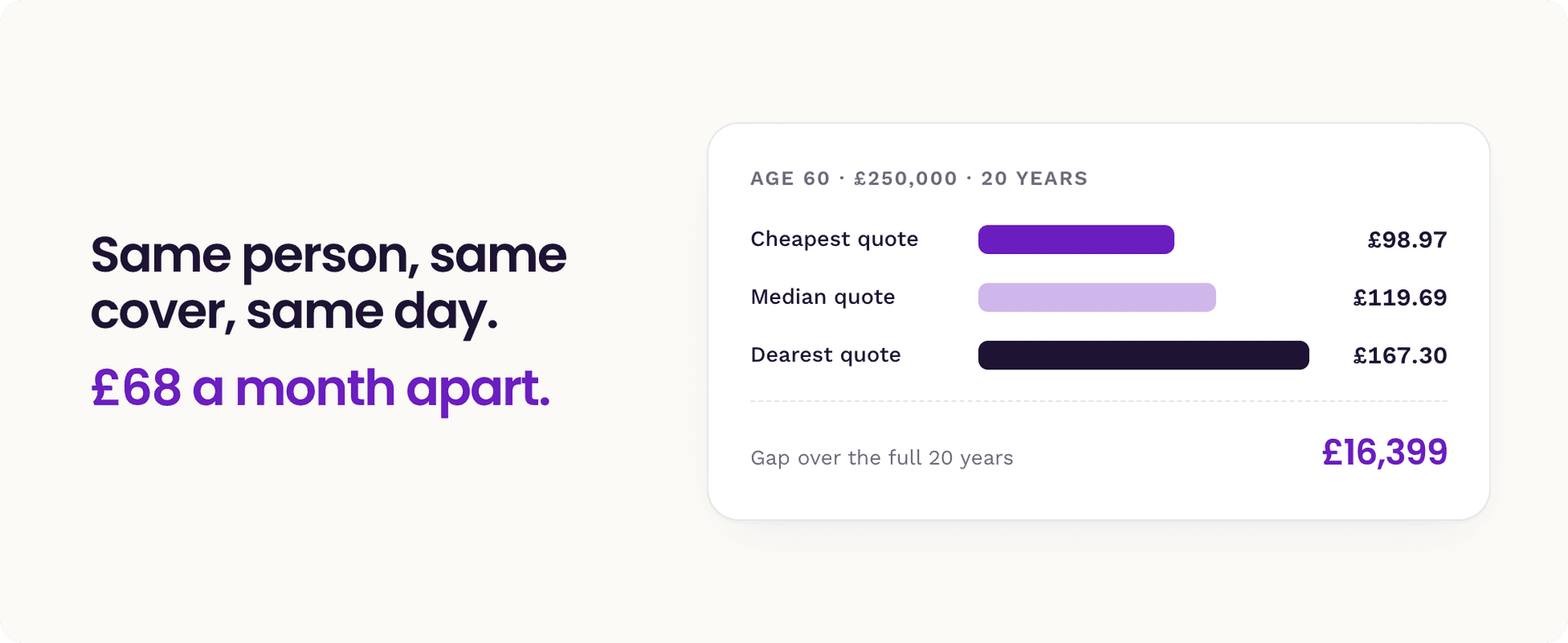
Life insurance cost UK 2026: what 6,557 real insurer quotes show
We collected 6,557 live quotes from UK life insurers in September 2026 and compared every one. Median prices by age, cover amount and policy length, how much smoking multiplies your premium, why bigger policies cost less per pound, and how mortgage protection compares with level cover.

What Is Term Life Insurance? UK Guide & Quotes (2026)
A complete UK guide to term life insurance: how it works, what it costs, the main policy types, underwriting, how it compares with whole of life, and the top UK providers.

6 Financial Resilience Tips for 2026
New Year, new money mindset. It’s time to break free from financial anxiety once and for all. Here are six simple tips to boost your financial resilience in 2026 and bring you peace of mind all year long!

Life Insurance for Young Adults
Life insurance for young adults doesn't have to be complicated or costly. This comprehensive guide covers why purchasing life insurance as a young adult locks in lower rates based on current health and how to pick the proper policy length and provider for your situation.

Turning Customer Curiosity Into Confidence: Theea's Coverage Calculator
Introducing Theea's Coverage Calculator: the intuitive insurance tool inspired by thousands of customer conversations that turns anxiety into tailored advice and confusion into confident choices.

Meet Your Newest Eleos Perks
We’re expanding our perks with two new additions designed to turn good intentions into healthy habits. Discover everything you can get for free with an Eleos policy.