What are discretionary benefits?


Contents
What are discretionary benefits? You’ll often come across them in the context of employment where they refer to features of your pay package that go beyond your salary. They can range from small treats like free lunches to more substantial benefits like gym memberships and health insurance.
They’re also common to insurance policies, although here they can mean two very different things. Some extras that are described as ‘discretionary benefits’ could more accurately be called ‘optional’ as they refer to additional cover like critical illness and accelerated death benefit (particularly in life insurance). The policy-holder pays extra for these add-ons, although they’re usually cheaper than buying the same cover separately.
Features that are more accurately termed ‘discretionary benefits’ in insurance are those for which the policyholder pays nothing. The insurer makes them available free of charge when a customer buys a policy.
There are examples of free extras in many types of insurance. Some, like bicycle cover in motor insurance, are advertised as free but their cost might have been factored into the premiums. Genuine no-cost extras are mostly unrelated to the purpose of the insurance and are provided simply to make policyholders’ daily routines a little brighter. For instance:
- Discounts at leading retailers
- Savings on holidays and days out
- Private GP services
- Free drinks and food from major chains
- Streaming subscriptions
- Free cinema tickets
Eleos is currently able to offer 24/7 remote access to GPs and other physical and mental healthcare services.

Want more for your money?
Choose Eleos for insurance policies with something extra
Special offers have been a marketing tool for as long as commerce has existed. Giving something extra, even if its monetary value is modest, is a way of demonstrating a brand’s willingness to go the extra mile for their customers. It makes the company more attractive while benefitting its users and encouraging repeat business.
Incentives
In trying to attract new customers, insurers recognise the value of offering incentives. The market is highly competitive and there’s a perception within the industry that, however good an insurance policy might be, adding something extra could tip the scales in favour of one over another.
Keeping customers
Insurance policies are long-term products. Unlike one-off purchases, they provide insurers with revenue by monthly instalments over many years, but customers can usually cancel at any time. That means retaining customers is vital to their commercial viability and is particularly important for policies that potentially last for a lifetime, like life or income protection insurance. However appealing their life insurance benefits or income protection insurance benefits might be, if customers have got used to using their free extras, they might be what makes them decide to stay.
Standing out
An insurance company is a brand, just like Converse or Coca Cola. It needs to differentiate itself from all its competitors. Obviously, the most important ways of doing this are by offering the best products and providing great customer service, but if there’s little to choose between competitors, the free extras can make all the difference.
Risk reduction
There can also be very practical reasons for including discretionary benefits with an insurance package. For example, offering free medical check-ups and other health services can reduce the need for customers to claim on their health or income protection insurance. The same is true of life insurance perks designed to look after your wellbeing
In this context, discretionary benefits mean something for nothing and although it’s true that you only get them once you’ve bought a policy, you’re not paying anything extra. They’re often characterised as ‘membership perks’ to emphasis their exclusivity.
Once you have access to your discretionary benefits it’s worth making the most of them. Your insurer may send you periodic reminders, but it’s up to you to use them. Sometimes you’ll need to activate them or register for certain services and if you don’t do this you’ll be missing out. It’s also sensible to keep yourself up to date with the status of your perks, because they can change, improve or be replaced with other equally valuable privileges.
When you apply for a policy, you should be told about the extras you’re getting, what they entitle you to and how to use them. For example, a perk that allows you to save money when you shop may specify a procedure you need to follow in order to get your discount. If you’re given access to health services you may need to create an account and register as a user. These are rarely complicated preparations but if you don’t make the effort you won’t get the benefit. Be aware that they are often operated by third-party providers, but you won’t incur any costs by signing up to them on another platform.
An insurance policy is a contract between you and the insurer. You agree to pay the premiums and disclose all relevant information, including changes in your circumstances. In return the insurer agrees to cover you for the amount agreed according to the terms and limitations of the policy.
Discretionary benefits fall outside this legal framework. The word ‘discretionary’ means that the insurer has chosen to provide them in addition to your contractual rights. They are entitled to withdraw any of these benefits at any time. It might be because the third-party provider has discontinued the service, or ended its agreement with the insurer. A benefit may have become uneconomical for the insurer to maintain. It’s even possible that new legislation has made it impossible or impractical to continue.
Whatever the reason, insurers are entirely within their rights to do this and there’s no right of appeal against their decision. In any case, a reputable insurance company will give you plenty of warning and will probably try to find a replacement that’s just as valuable and useful.
What are discretionary benefits?
Frequently asked questions
Fact-checked and reviewed by Kiruba Shankar Eswaran or another licensed agent on our team. Read our editorial standards.
This guide is for general educational purposes and is not financial advice. Cover, eligibility and terms vary by insurer and by policy. Always read the policy documents for the full terms, limitations and exclusions before you buy.
Related resources
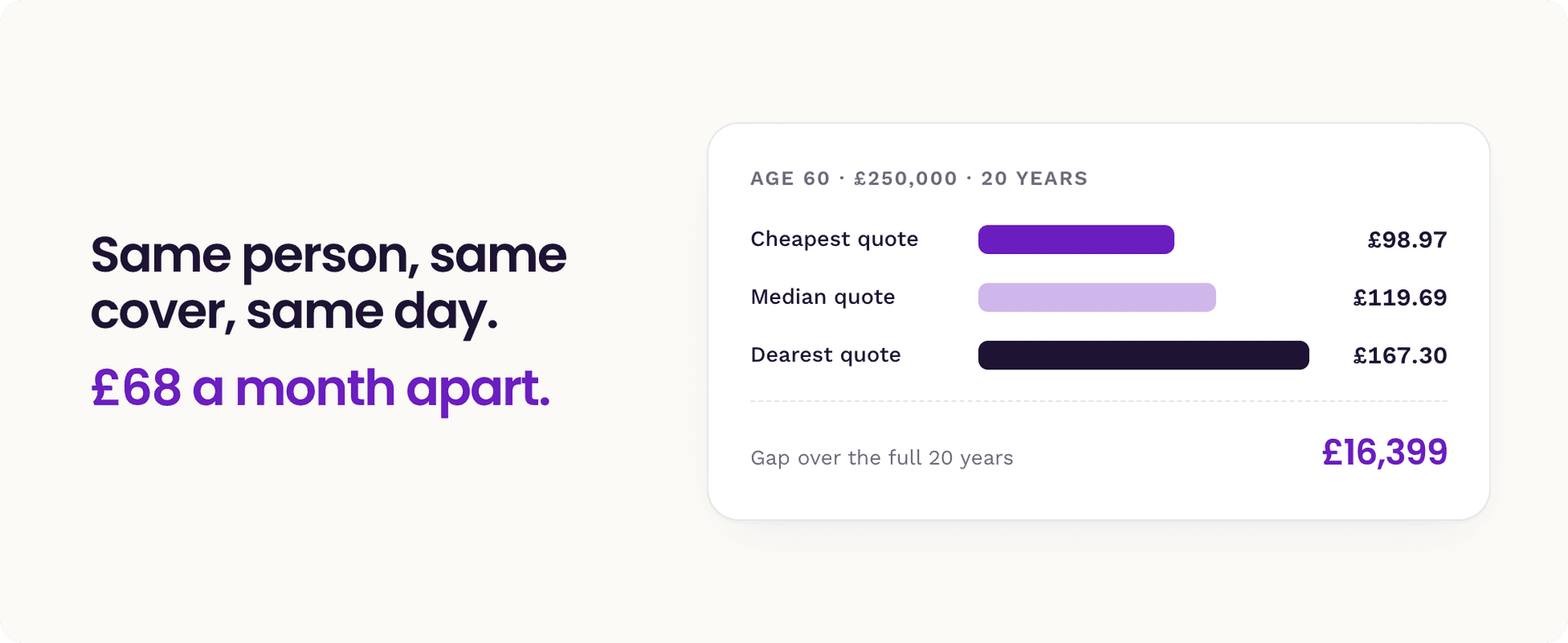
Life insurance cost UK 2026: what 6,557 real insurer quotes show
We collected 6,557 live quotes from UK life insurers in September 2026 and compared every one. Median prices by age, cover amount and policy length, how much smoking multiplies your premium, why bigger policies cost less per pound, and how mortgage protection compares with level cover.

What Is Term Life Insurance? UK Guide & Quotes (2026)
A complete UK guide to term life insurance: how it works, what it costs, the main policy types, underwriting, how it compares with whole of life, and the top UK providers.

6 Financial Resilience Tips for 2026
New Year, new money mindset. It’s time to break free from financial anxiety once and for all. Here are six simple tips to boost your financial resilience in 2026 and bring you peace of mind all year long!

Life Insurance for Young Adults
Life insurance for young adults doesn't have to be complicated or costly. This comprehensive guide covers why purchasing life insurance as a young adult locks in lower rates based on current health and how to pick the proper policy length and provider for your situation.

Turning Customer Curiosity Into Confidence: Theea's Coverage Calculator
Introducing Theea's Coverage Calculator: the intuitive insurance tool inspired by thousands of customer conversations that turns anxiety into tailored advice and confusion into confident choices.

Meet Your Newest Eleos Perks
We’re expanding our perks with two new additions designed to turn good intentions into healthy habits. Discover everything you can get for free with an Eleos policy.